





Laser Welding Machine
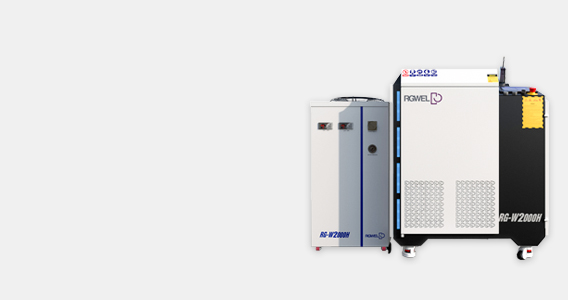
Laser welding machines are next-generation joining technologies that utilize high-energy laser beams to fuse materials with exceptional precision and efficiency. RGWEL’s fiber laser systems are designed for industrial manufacturing lines, providing consistent, durable, and aesthetically superior welds across stainless steel, carbon steel, aluminum, brass, and copper.
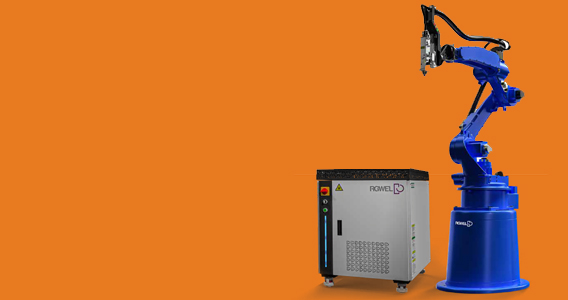
Whether for small workshops or large-scale automated lines, our fiber and robotic laser welding systems deliver unmatched control, efficiency, and reliability.



What Is a Laser Welding Machine?
A laser welding machine utilizes concentrated laser energy to join metallic components with precision, speed, and minimal thermal distortion.
This method replaces traditional TIG and MIG processes in many industries due to its clean, strong, and visually appealing weld seams.
Key features:
-
Minimal thermal deformation even on thin sheets
-
Excellent repeatability and automation compatibility
-
Clean, slag-free weld seams
-
Reduced post-processing (grinding and polishing often unnecessary)
Advantages of Laser Welding Machines
-
3–5× faster welding speed than conventional methods
-
Up to 40% higher energy efficiency
-
Minimal distortion and high weld strength
-
Seamless integration into robotic automation lines
-
Reduced maintenance and consumable costs
General Technical Specifications
-
Power range: 1000–20000 W
-
Fiber type: Single-mode / Multi-mode
-
Spot diameter: 0.2–0.8 mm
-
Compatible with continuous or pulsed laser operation
-
Cooling system: Industrial water chiller
-
Beam delivery: Fiber optic cable up to 15 m
Typical Industrial Applications
-
Automotive & Transportation
-
Metal furniture & construction components
-
HVAC and white goods manufacturing
-
Aerospace and defense production
-
Electrical cabinets & machine frames
Comparative Table – Laser Welding vs Conventional Methods
| Feature | Fiber Laser Welding | MIG/MAG Welding | TIG Welding |
|---|---|---|---|
| Welding Speed | 3–5× faster | Moderate | Slow |
| Energy Efficiency | Up to 40% savings | Average | Low |
| Weld Quality | High precision, aesthetic | Medium | High |
| Distortion | Minimal | High | Moderate |
| Automation | Fully compatible | Limited | Manual |
Purchasing Guide – Choosing the Right Laser Welding Machine
-
1000–2000 W: ideal for light sheet metal works and small workshops.
-
3000–6000 W: for medium-scale industrial applications and OEM production.
-
8000–20000 W: for robotic welding, automotive, and heavy industry.
Always select your machine based on material type, thickness, and desired productivity level.
Pricing and Turkish Market Dynamics
Laser welding technology is rapidly expanding in Türkiye due to the demand for cleaner, faster, and more cost-efficient joining methods.
In 2025, the market value of fiber laser welding systems in Türkiye is projected to exceed $120 million, driven by local manufacturing incentives and the shift toward Industry 4.0 automation.
History & Technological Development
The first industrial laser welding systems emerged in the 1970s, using CO₂ lasers.
In the 1990s, fiber lasers revolutionized precision joining by increasing energy efficiency and reliability.
Today, RGWEL’s locally engineered solutions deliver global-level performance in automation and robotic manufacturing.
How can we help?
For questions or quote requests, you can reach us via the contact form or call our number for the fastest support.